Within the aggregate processing sector, granite presents a formidable challenge due to its high compressive strength and abrasive mineralogy. Efficiently reducing this material at or near the extraction point is paramount for economic viability. While various crusher types exist, the portable jaw crusher has established itself as a cornerstone technology for primary reduction in granite applications, particularly in scenarios demanding logistical flexibility. Its design, rooted in compressive force mechanics, is uniquely suited to initiate the comminution process for this hard rock. This analysis examines the operational principles, advantages, and specific configurations of portable crushers, elucidating their critical function within the broader granite processing workflow and the strategic value they provide in modern, mobile aggregate production.
Operational Mechanics and Design Adaptations for Granite
The efficacy of a jaw crusher for granite stems from its fundamental operating principle. A reciprocating jaw, typically the moving element, exerts immense compressive force against a fixed jaw, fracturing the rock along its natural cleavage planes. This nip-angle, formed between the two jaw dies, is a critical design parameter for granite processing. An optimal angle provides a balance between sufficient grip to draw material into the chamber and the necessary mechanical advantage to apply the required breaking force without excessive wear or energy consumption.
Chamber Geometry and Metallurgy for Abrasive Service
The crushing chamber’s geometry in a portable jaw crusher for granite is engineered for durability and effective reduction. Manufacturers often employ a steep nip angle and a longer crushing chamber to manage the rock’s resistance. The metallurgy of the jaw dies is non-negotiable. High-grade manganese steel, often in a 14-18% manganese content with proper hardening through work-hardening during operation, is standard. Premium models may feature alloyed manganese steel or composite dies with wear-resistant inserts in high-abrasion zones. The robust construction of the main frame, eccentric shaft, and toggle plate is also accentuated to withstand the cyclic, high-stress loading inherent in granite fragmentation, ensuring structural integrity and longevity in portable, often high-utilization applications.
Feed System Integration and Pre-Screening
Maximizing efficiency in a portable setup requires intelligent integration of the feed system. A vibrating grizzly feeder (VGF) is typically mounted ahead of the crusher. This serves a dual purpose: it regulates a consistent, optimal feed rate to the jaw chamber, and its grizzly section performs critical scalping. Removing fines and smaller, naturally sized material before it enters the crusher prevents chamber packing and allows the jaw to dedicate its energy and wear life to breaking only the oversized material that requires primary reduction. This pre-screening action significantly increases the effective capacity of the portable plant and reduces unnecessary wear on the jaw dies, a key consideration for abrasive granite.
The Strategic Advantage of Portability in Granite Operations
The decision to utilize a portable jaw crusher over a stationary counterpart is driven by more than mere convenience; it is a strategic calculation that impacts logistics, site development costs, and operational flexibility.
Reduction of Primary Haulage and Associated Costs
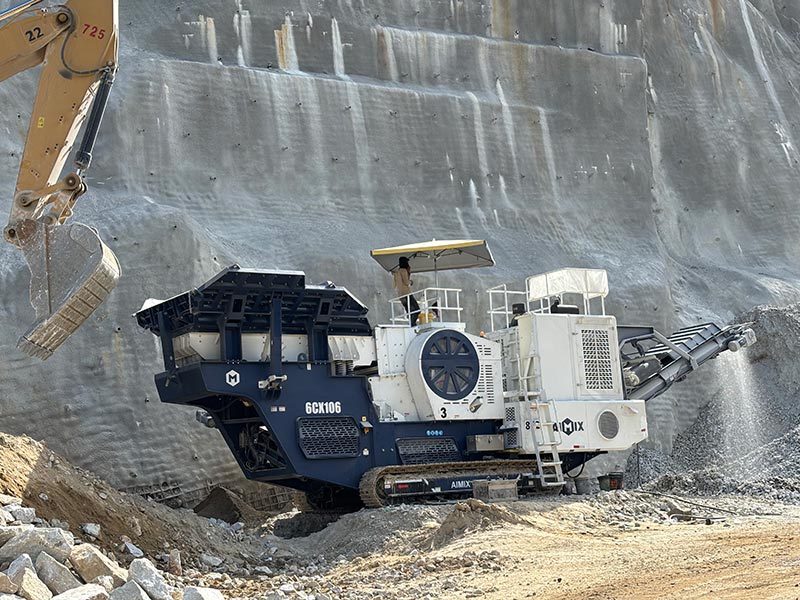
The most significant economic benefit is the elimination of primary haulage. In a traditional fixed-plant model, run-of-quarry granite must be transported by heavy trucks from the blast face to the primary crusher. This cycle consumes substantial fuel, incurs tire and maintenance costs, and introduces scheduling dependencies. A portable jaw crusher, often track-mounted, is positioned directly at the quarry face. It processes the material at the source, immediately reducing its size for more efficient conveyor transport to downstream secondary and tertiary stages. This logistical compression directly translates into a lower cost per ton of processed material.
Facility for Multi-Site and Contract Crushing Applications
For aggregate producers with multiple, dispersed granite deposits or for contract crushing specialists, portability is the core of the business model. The entire primary crushing unit can be relocated in a matter of days. This mobility enables the economic exploitation of smaller, satellite reserves where establishing permanent infrastructure is unjustifiable. It also allows contractors to service various clients sequentially, maximizing asset utilization. The self-contained nature of modern portable jaw plants—integrating power, feed, crushing, and sometimes even a discharge conveyor—allows for rapid deployment and commissioning, turning capital equipment into a highly responsive production asset.
Integration into Complete Processing Circuits
A portable jaw crusher is rarely an island; it is the initial node in a material processing circuit. Its performance and configuration are intrinsically linked to the downstream equipment, especially in granite applications where product shape and gradation are critical.
Coupling with Mobile Secondary and Screening Units
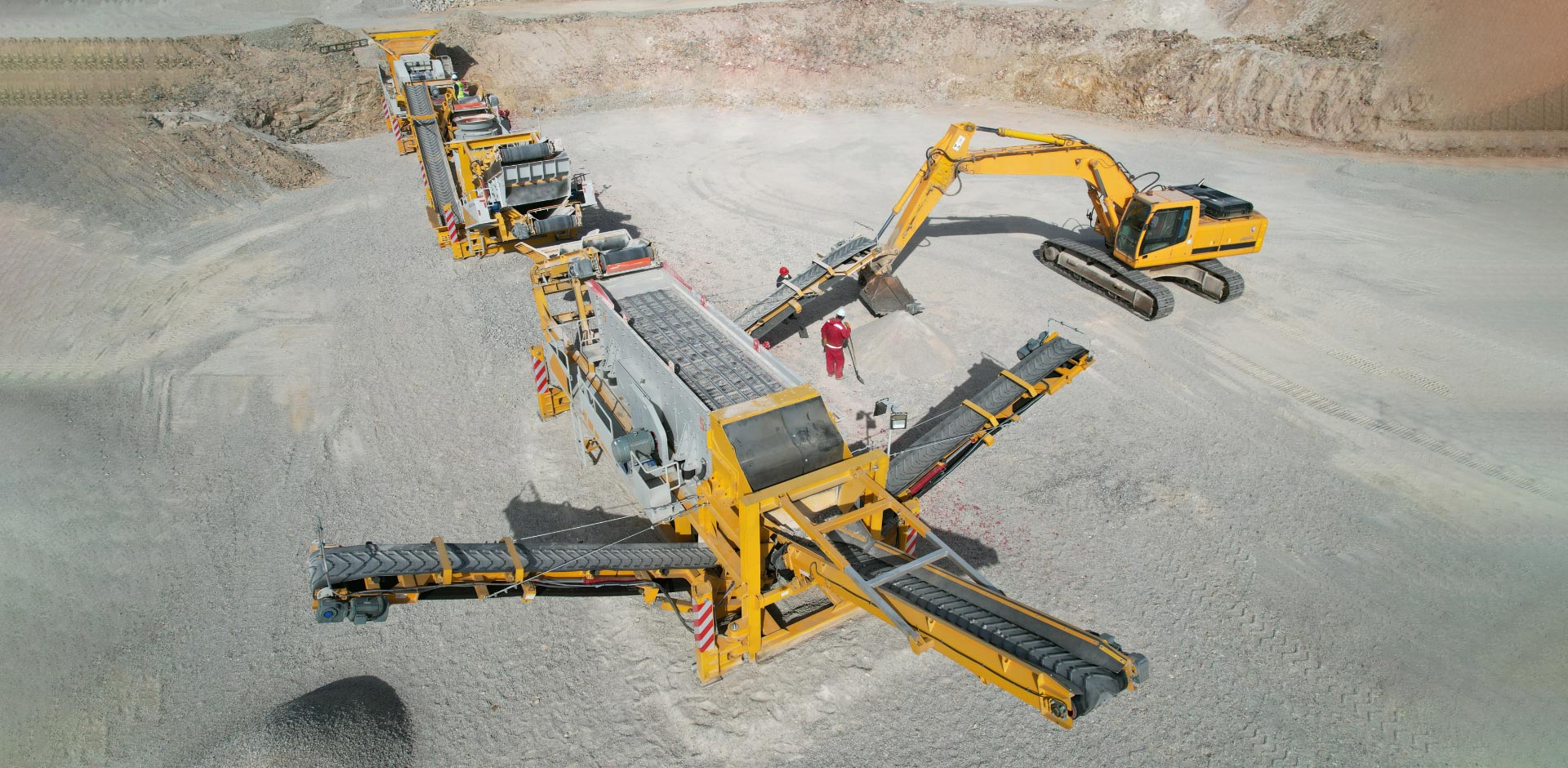
The output from a portable jaw crusher, typically reduced to 6- to 8-inch minus, is ideally suited for feeding a portable secondary cone crusher. This tandem setup, often arranged on separate tracked chassis for maximum flexibility, creates a highly efficient closed-circuit system. The jaw crusher machine performs the heavy-duty primary break, while the cone crusher refines the material, improving particle shape for high-value concrete and asphalt aggregates. This integrated portable train can be complemented with mobile screening units to scalp and size the product directly at the site, creating finished spec material without the need for fixed inter-plant conveyors.
Considerations for Closed-Side Setting and Throughput Balance
Optimizing a portable jaw crusher for granite requires careful management of the closed-side setting (CSS) to achieve the desired product size for the downstream process. A wider CSS increases throughput but yields a coarser product that may overburden the secondary crusher. A tighter CSS produces a finer primary product but reduces the jaw’s capacity. The portable plant’s control system must allow for easy, precise CSS adjustment, often hydraulically assisted, to fine-tune this balance based on feed material variability and final product requirements. This operational flexibility is key to maximizing the overall yield and quality of the entire portable crushing circuit when processing demanding materials like granite. Thus, the portable jaw crusher functions not merely as an entry point, but as the adjustable governor for a sophisticated, mobile production system.