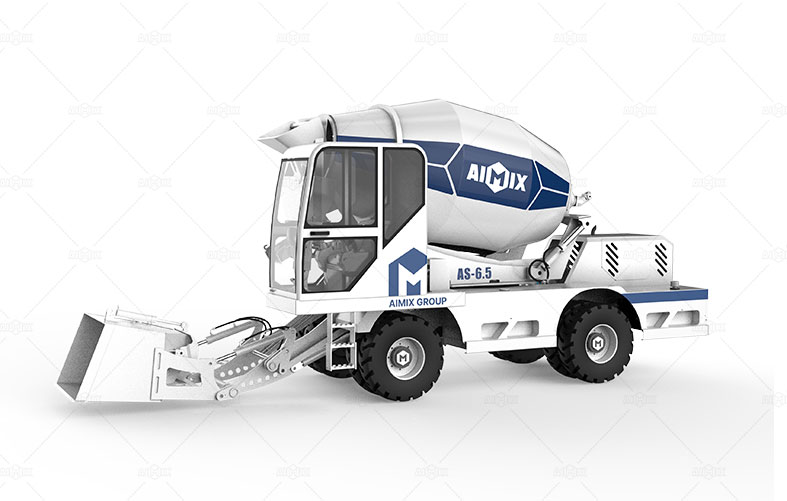
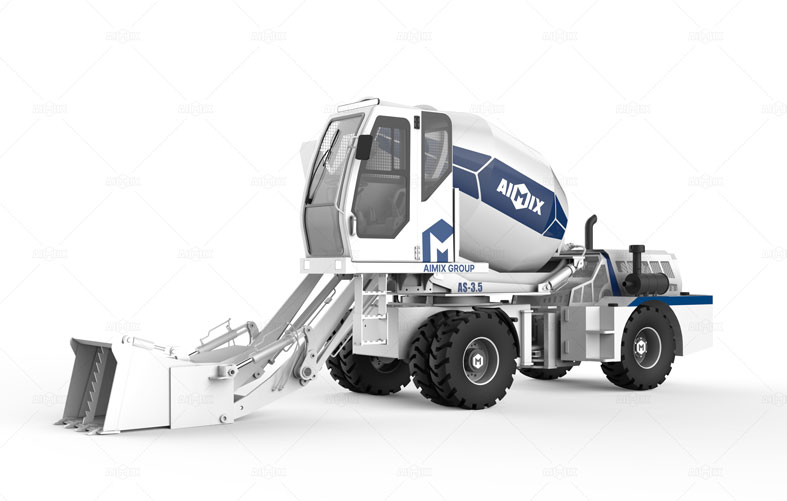
For construction entrepreneurs and small to medium-sized contractors in Ghana, the leap from manual labor and subcontracting to owning major productive assets is a pivotal moment. The self-loading concrete mixer, with a market entry point around $35,000, presents a compelling and disruptive proposition. This self loading concrete mixture is not merely a mixer; it is an integrated production unit combining a loader, a water tank, a cement hopper, and a mixing drum on a mobile chassis. Its potential to transform a business hinges not on vague promise, but on a clear-eyed analysis of its capacity to solve specific, acute challenges within the Ghanaian construction ecosystem. The question of transformation rests on three pillars: its operational autonomy in areas with underdeveloped supply chains, its economic model for small-batch production, and the strategic agility it grants a business in a dynamic market. This investment warrants scrutiny beyond the concrete mixer price in Ghana, focusing on its function as a strategic lever for growth and resilience.
Addressing Foundational Market Gaps: Autonomy in a Challenged Logistics Landscape
The Ghanaian construction environment outside major urban centers is often characterized by fragmented supply chains and logistical impediments. Reliable access to ready-mix concrete can be inconsistent and prohibitively expensive once transport costs over poor roads are factored in. This is the primary domain where a self-loading mixer asserts its transformative potential. The machine’s core innovation is operational sovereignty. It can produce concrete on-site using locally sourced aggregates, bagged cement, and available water. This capability effectively decouples the contractor from the uncertainties and costs of the traditional concrete supply chain. Projects in peri-urban developments, emerging residential zones, or rural infrastructure initiatives become feasible without the logistical tail of coordinating multiple material deliveries. The machine turns any accessible plot with basic aggregate stockpiles into an instant, micro-scale concrete batching plant, collapsing time and distance in the supply process.
The Economic Calculus for Small and Medium Volume Projects
The financial viability of a $35,000 investment is determined by its revenue generation profile against the cost of alternatives. The self loading concrete mixture excels in a specific volumetric niche: small to medium pours that are uneconomical for large ready-mix trucks or overwhelmingly labor-intensive for manual mixing.
Direct Cost Displacement and Revenue Capture
For a contractor, the machine directly displaces two major costs: the premium paid for delivered ready-mix and the high labor cost of manual mixing for volumes beyond a few cubic meters. By producing concrete on-demand, the business captures the full margin between the cost of raw materials and the final placed concrete price. This margin must then service the capital cost, fuel, maintenance, and generate profit. A detailed project-based analysis is critical. For instance, constructing foundations for a block of four villas, or supplying concrete for a series of small commercial shops, represents the ideal workload—repetitive, site-contained, and of a volume that maximizes the machine’s daily output without requiring protracted, continuous operation.
The Strategic Advantage of Bid Competitiveness and Scheduling Control
Ownership of this asset provides a significant competitive edge in bidding. A contractor can submit more aggressive quotes for projects where concrete supply is a known challenge, as they have internalized and controlled that cost center. Furthermore, it grants absolute control over the production schedule. There are no delays waiting for a third-party supplier; concrete is produced precisely when the work gang is ready to place it. This control enhances site productivity, reduces idle labor time, and improves client satisfaction through predictable progress. The business transforms from a scheduler dependent on external parties to a master of its own timeline.
Implementing the Investment: Realities of Operation and Path to ROI
Transformation is not automatic; it is contingent on disciplined operational management and a clear path to return on investment. The mini cement mixer machinery introduces a new set of operational parameters that must be mastered.
Mastering the Machine: Operator Skill and Maintenance Protocol
The sophistication of a self-loader demands a higher level of operator skill than a standard site laborer. The individual must understand basic mechanical principles, the fundamentals of concrete mix design, and safe loading and maneuvering procedures. Investing in thorough operator training is non-negotiable; a poorly operated machine will lead to low-quality output, excessive wear, and costly downtime. A strict, preventative maintenance regimen is equally vital. The harsh Ghanaian environment—dust, heat, and variable fuel quality—requires diligent servicing of the engine, hydraulics, and mixing system. The operational uptime of the asset is the single greatest determinant of its financial return. A broken machine represents a stranded capital investment and damaged reputation.
Modeling the Return and Scaling the Business
A realistic financial model must be constructed before purchase. This involves calculating the potential revenue per month based on a conservative estimate of billable cubic meters, then subtracting all operational costs: financing payments, fuel, maintenance reserve, and operator salary. The surplus constitutes the profit generated by the asset. A well-utilized machine in a market with strong demand for small-batch concrete can potentially achieve a full return on investment within 18 to 30 months. Upon achieving this, the business enters a new phase. The cash flow generated by the first unit can fund a second, or be leveraged to acquire complementary equipment like a small dump truck or brick-making machine. This is the true transformation: the self-loader stops being a mere tool and becomes the foundational capital asset that fuels the systematic scaling of a contracting enterprise. It enables the business to graduate from subcontracted pieces of work to being the primary, integrated service provider for a growing client base.
Therefore, the question is not whether a $35,000 self-loading large concrete mixer for sale is transformative. It is whether a business owner possesses the strategic vision to target the right projects, the operational rigor to maintain the asset, and the financial discipline to reinvest its returns. For those who do, this machine is more than an equipment purchase; it is a direct investment in business independence, market relevance, and accelerated growth within Ghana’s vibrant construction sector.